Zen Idle: Gravity Meditation
- 4.2
- Rating
- 1.00M
- Installs
- Free
- Price

 Analysis by App-foxy
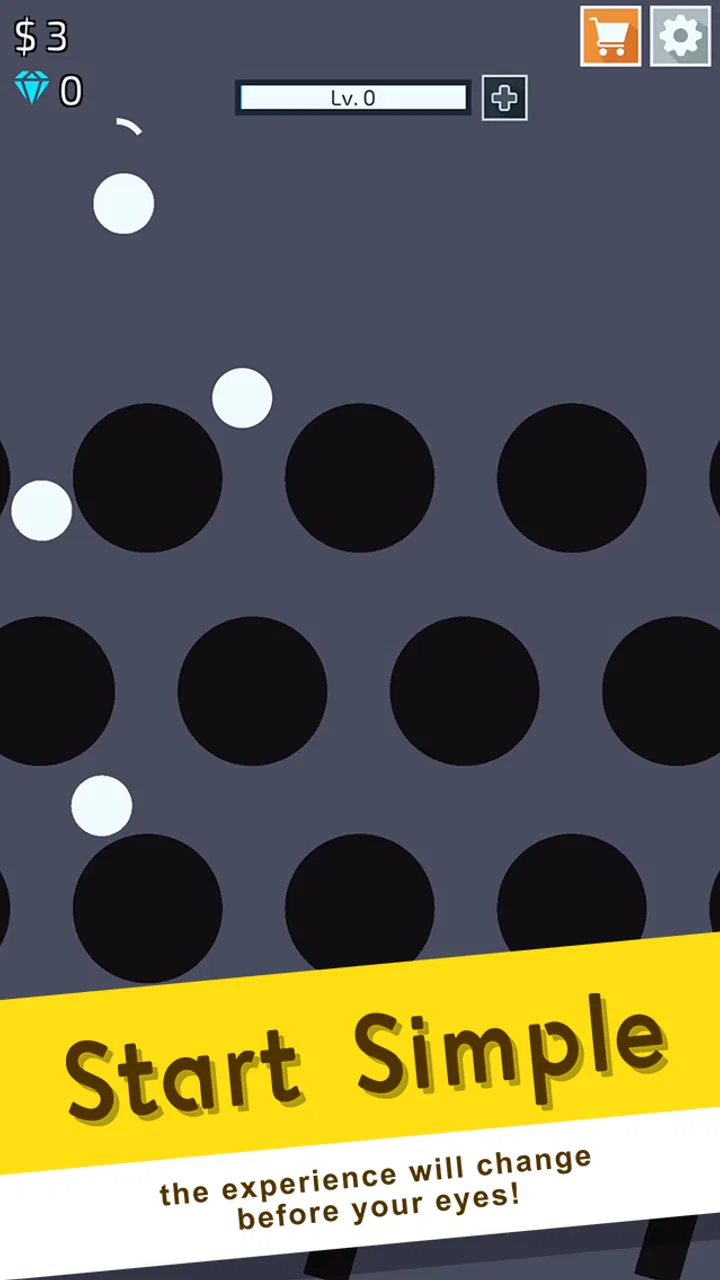
I approached Zen Idle: Gravity Meditation expecting a small time-filler, but its appeal is more specific than that. This is a free simulation game from Tech Tree Games built around watching balls move through gravity-driven paths, then making occasional decisions that improve the flow. It is deliberately slow, visually calm, and much more comfortable with short check-ins than with constant tapping.
That distinction matters. I would not recommend it to someone looking for a traditional physics sandbox, a story campaign, or an idle game packed with active missions. I would recommend it to anyone who likes seeing gradual progress while listening to music, waiting for an appointment, or taking a short break from a more demanding game. Its best quality is that it asks very little from me while still giving me a reason to return.
How the current version feels to play
The central loop is easy to understand: balls tumble, progress accumulates, and I use that progress to improve the system. The motion does most of the entertaining work. Instead of asking me to guide every object manually, the game turns gravity and repeated movement into a relaxing visual rhythm. I can watch for a while, close the game, and come back later to see how far the setup has advanced.
You May Also Like

 Blood Strike: 2.5 Anniversary
Blood Strike’s Loadouts Turn Every Drop Into a Tactical Gamble
A close look at Blood Strike’s custom loadouts: how fast access to signature weapons reshapes its battle royale rhythm, rewards preparation, and narrows the gap between fights.

 Pandora - Music & Podcasts
Pandora’s Music Is Easy to Start, but Harder to Recover
Pandora’s strength is its low-effort path from a seed to a station. Its weak spot is how much confidence it asks you to place in connection, setup, and quiet recovery.

 8 Ball Pool
 Is Built on Rivalries, Rematches, and Routine
A close look at the rivalries, rematches, shared routines, and unanswered safety questions that turn a quick pool match into a persistent mobile community.

 Samsung Music
’s Quiet Strength Is Playing What You Already Own
Its reach comes less from spectacle than from dependable access to a personal library. That simplicity is both the app’s strongest retention engine and its ceiling.

 AccuWeather: Weather Radar
AccuWeather Review: A Quick, Clear Forecast for Everyday Decisions
For everyday plans, the best forecast is the one you can understand quickly. AccuWeather makes rain timing, radar, and local conditions easy to act on, with a few trade-offs.

 Hill Climb Racing
Why Hill Climb Racing Still Turns Crashes Into One More Run
A tiny car, a bumpy hill and one more upgrade: Hill Climb Racing keeps resurfacing because its simple chaos makes every near-miss feel personal.
More From Our News Desk



That makes the opening unusually approachable. There is no need to learn a complicated control scheme before the game becomes enjoyable. The first few sessions are mainly about understanding what each upgrade changes and noticing how a small improvement can make the whole arrangement feel more productive. I found that satisfying because the feedback is visible rather than hidden behind a wall of menus.
The word “idle” is important here, but it should not be mistaken for “completely automatic.” The game still benefits from attention at the right moments. I need to decide where to spend resources, when an upgrade is worth taking, and whether I want a faster short-term gain or a stronger long-term setup. Those choices are simple, yet they prevent the experience from becoming a screensaver with no decisions at all.
In everyday use, I can imagine opening it during a train ride, checking the board while coffee brews, or leaving it running during a quiet evening. It works especially well when I want something interactive without committing to a full play session. A few minutes can be enough to collect progress and make one meaningful adjustment.
The calm presentation is the main feature
The visual design supports the idea of a digital wind-down. Balls dropping and bouncing through the layout create a steady pattern that is easy to follow, and the lack of frantic action makes it suitable for relaxed play. I do not have to react quickly or worry about losing because I looked away for a moment. That forgiving pace is a genuine strength for people who use games to decompress.
There is also a useful psychological balance in the movement. The balls provide immediate activity, while the upgrades provide delayed satisfaction. I can see something happening now, but I am also working toward a better result later. That combination is why the game can hold my attention even when the underlying actions are repetitive.
Still, the same calm design can feel too uneventful if I am in the mood for challenge. The game does not replace a puzzle title, an action game, or a management simulator with a busy economy. Its purpose is narrower: it turns passive observation into a light progression routine.
Where the strategy actually appears
The interesting decisions are less about reflexes and more about timing. When I have enough currency for an improvement, I have to think about whether it will noticeably change the flow or merely provide a small increase. Spending immediately feels good, but saving for a more influential upgrade can produce a stronger turning point. I found that waiting briefly and observing the current bottleneck is often more useful than buying the first available option.
A practical approach is to watch where the system seems least efficient. If balls are moving smoothly but rewards are arriving slowly, an upgrade that improves the overall earning rate may matter more than one that only makes the animation busier. If the board already produces resources steadily, a different improvement may offer better momentum. The game does not require advanced calculations, but it rewards paying attention to cause and effect.
Another useful habit is to treat each visit as a small maintenance session. I collect what has accumulated, review the available improvements, and avoid spending everything automatically. This keeps the progression feeling intentional. It also reduces one of the common frustrations in idle games: reaching a point where upgrades become routine and I stop caring why I am buying them.
The strongest way to play is to use the idle time as a planning window, not just free currency. The balls keep the game moving, but the player’s job is to notice which change will make the next stretch more satisfying.
What the version and release history suggest
The current version is 2.1.11, while the game originally arrived on July 11, 2019. That combination tells me this is not a brand-new experiment waiting to prove its basic concept. It has had time to settle into its identity, and the version number shows that the developer has continued to maintain the product beyond its initial release.
I would be careful, however, about treating a version number as a promise of a particular feature. It is evidence of ongoing iteration, not a guarantee that every update will transform the experience. For a player deciding whether to install it today, the more important point is that the current build represents a mature version of the same relaxing gravity-and-progression idea rather than an unfinished launch product.
That maturity is helpful for new users because the opening loop is already clear. Existing players may see the situation differently: a long-running idle game can become familiar, and a newer build does not automatically remove the feeling of repetition. The product’s evolution appears to support its established formula rather than abandon it, which is reassuring if I already enjoy the format but less exciting if I want a complete reinvention.
Who will get the most from it
I think this game suits people who enjoy incremental progress, light management, and soothing motion. It is particularly comfortable for players who like to check a game several times throughout the day instead of sitting down for a single long session. It can also work for someone who wants a low-pressure introduction to idle games because the basic idea is easy to grasp.
It is a good fit if you enjoy watching a system gradually become more productive. The pleasure comes from seeing the same basic movement produce better results after thoughtful improvements. Players who like optimizing small routines may find more depth here than the simple presentation initially suggests.
On the other hand, I would skip it if you need a strong narrative, character development, competitive matches, or constant objectives. The game does not seem designed to provide dramatic surprises every few minutes. If your ideal simulation involves building a city, managing workers, or responding to unpredictable events, this minimalist format may feel empty rather than peaceful.
It is also not the best choice for anyone who dislikes idle progression on principle. The game’s appeal depends on accepting that waiting is part of the design. Active input improves the setup, but it does not turn the experience into a hands-on physics challenge.
Free access and the question of spending
The game is free to download, which makes it easy to try without a financial commitment. It includes in-app purchases ranging from $4.99 to $99.99 per item. That wide range is worth keeping in mind before starting, especially if I am prone to spending when progress slows or when a convenient shortcut appears.
My advice is to play the opening sessions without assuming that a purchase is necessary. The core attraction is the gradual motion and the decisions around progression, so rushing through every waiting period can remove part of what makes the game distinctive. If I spend, it should be because I value the convenience, not because I feel pressured to make the basic loop enjoyable.
This is one area where the game differs from a paid relaxation app. A paid title may offer a more predictable cost, while this free model lowers the entry barrier but asks me to be more aware of optional purchases. The right choice depends on whether I prefer trying first and deciding later or paying once for a more fixed experience.
How it compares with other simulation and idle games
Compared with management simulations, this game removes most of the administrative burden. I am not balancing a large roster, arranging a complex production chain, or responding to a long list of events. That makes it easier to play casually, but it also means there is less room for elaborate planning.
Compared with clicker games, it puts more emphasis on watching a physical process. The balls give the progression a visible shape, so I am not only reading larger numbers on a screen. The movement creates a sense of place, even though the underlying loop remains incremental. For me, that makes it more relaxing than a purely numerical clicker, but not necessarily more demanding.
Compared with physics games, the trade-off goes in the opposite direction. I get the pleasure of gravity, bouncing, and motion without the pressure of solving each interaction myself. A physics puzzle would offer more direct control and probably more failure, while this game offers continuity and calm. Neither approach is better in every situation; they serve different moods.
The game’s niche is therefore quite clear. It sits between a visual idle toy and a gentle simulation, with enough resource decisions to keep me involved but not enough complexity to become a serious management challenge. That focused identity is a benefit as long as I want exactly that kind of experience.
Small habits that improve the experience
I get more from it when I avoid leaving it open purely out of habit. Instead, I give each visit a purpose: collect progress, inspect the available improvements, and decide whether the next change supports the way the board is currently behaving. This prevents the game from becoming background noise and makes the short sessions feel more deliberate.
I also recommend watching the result of an upgrade before immediately making another purchase. The visual flow can reveal whether the improvement changed anything meaningful. If the balls move in a way that looks almost identical and the resource gain barely feels different, it may be wiser to save for a larger change rather than spending automatically.
For longer breaks, I would check the game before putting the phone away and again when I return. That creates a natural rhythm without demanding constant attention. It is a better use case than trying to stare at the screen continuously, because the design is built around accumulation between visits.
Finally, I would keep expectations modest. The game is most enjoyable when I treat progress as a quiet background reward. If I expect every session to deliver a major unlock or a dramatic new system, the repetition will stand out more sharply.
Accessibility, device fit, and audience
The age rating is Everyone, which matches the gentle presentation and nonviolent premise. The minimum operating-system requirement is Android 7.0, so it remains accessible to users with older compatible devices. That matters for a lightweight game intended for casual use: I do not need a recent flagship phone to understand its appeal.
The game has reached over one million installs, with an average rating of 4.2 from around forty-four thousand ratings and roughly four thousand four hundred written reviews. Those figures suggest a substantial audience and a generally positive reception, while still leaving room for the conclusion that it will not satisfy every player. A calm idle game naturally divides people between those who enjoy repetition and those who find it too passive.
I would also consider the practical context of play. Because the main interaction is visual and does not demand rapid reactions, it is comfortable for brief, interrupted sessions. But if I am sensitive to repetitive animation or prefer a clear endpoint, the continuous nature may become tiring. The same design that helps the game relax me can make it difficult to identify a natural stopping point.
What existing players and new players should watch
New players should watch how quickly the initial novelty turns into routine. If the combination of visible motion and gradual upgrades still feels satisfying after several short visits, the game is likely to fit their habits. If the first session already feels like watching numbers rise without enough decision-making, later progress may not solve that problem.
Existing players should pay attention to whether the current version improves their daily rhythm rather than simply adding more time spent checking the app. A mature idle game can be enjoyable for years, but it can also become a reflexive collection task. The healthiest way to keep it engaging is to set a personal reason for returning, such as experimenting with a more efficient upgrade path or enjoying a few quiet minutes.
I would also watch the balance between patience and convenience. Optional purchases can make waiting less noticeable, but waiting is part of the game’s identity. If removing that delay makes the experience more pleasant, a purchase may feel worthwhile; if it removes the anticipation that keeps the loop interesting, it may work against the reason I installed the game.
My recommendation
After spending time with it, I see this as a focused relaxation game rather than a broad simulation. Tech Tree Games has built the experience around a simple idea and resisted making it depend on frantic controls or complicated instructions. The result is easy to start, easy to revisit, and surprisingly pleasant when I want a quiet form of progress.
Its limitations are just as clear. The activity can become repetitive, the strategic layer remains light, and players who need stories or high-energy goals will probably move on quickly. The free model also deserves sensible spending boundaries because the optional purchase range is substantial.
For the right player, though, those weaknesses are manageable. I would install it when I want a low-pressure game that can sit beside my day instead of taking it over. Zen Idle: Gravity Meditation is at its best when I let the balls tumble, make a few thoughtful improvements, and accept that the reward is gradual rather than dramatic. If that sounds like your kind of downtime, this free simulation is worth trying; if you want direct control and constant challenge, a more active alternative will serve you better.
FAQs for Zen Idle: Gravity Meditation
01What is Zen Idle: Gravity Meditation?
Zen Idle: Gravity Meditation is a relaxing idle game that combines simple physics-based gameplay with incremental progression. You launch or guide balls through gravity-powered boards, collect rewards, unlock upgrades, and gradually improve your earnings even when you are not actively playing. Its calm visual style and gentle pacing make it suitable for short sessions or longer, more passive play.
02How does the gameplay work in Zen Idle: Gravity Meditation?
The main objective is to drop balls onto a board and let gravity direct them through different paths and obstacles. As the balls move, they generate coins or other resources that can be spent on upgrades. These improvements increase ball value, efficiency, and passive income, allowing progress to continue with relatively little interaction while still giving you occasional strategic decisions to make.
03Can I play Zen Idle: Gravity Meditation offline?
The core idle gameplay may remain available without a constant internet connection, which is useful when traveling or when you want a quiet, distraction-free experience. However, certain features can depend on online access, including advertisements, cloud synchronization, special events, leaderboards, analytics, or in-app purchases. Availability may also vary by device and game version, so checking the current store description is recommended.
04Does Zen Idle: Gravity Meditation contain ads or in-app purchases?
Like many free-to-play idle games, Zen Idle: Gravity Meditation may include optional advertisements and in-app purchases. Ads can sometimes provide bonuses, extra rewards, or faster progress, while purchases may remove advertising or offer premium currency and upgrade bundles. You can generally play without spending money, but progression may feel slower if you avoid every optional boost.
05Is Zen Idle: Gravity Meditation suitable for children and casual players?
The game is easy to understand because its controls and objectives are straightforward, making it accessible to casual players and people looking for a low-pressure experience. Nevertheless, parents should review the current age rating, advertising content, privacy information, and purchase settings before allowing children to play. The presence of optional purchases means parental controls are advisable on shared devices.
Pros
- Simple one-touch gameplay is easy to learn and play casually.
- Gravity-based mechanics create satisfying visual movement and feedback.
- Runs well for short sessions when you have only a few minutes.
- Progress continues through idle rewards while you are away.
- Relaxing presentation suits players seeking a low-pressure experience.
Cons
- Progress can feel slow without frequent upgrades or extended play.
- The core gameplay loop may become repetitive after longer sessions.
- Some upgrades and rewards can encourage spending or watching ads.
- Limited interaction may disappoint players seeking active challenges.
- Offline earnings and progression may be restricted compared with active play.

Zen Idle: Gravity Meditation
Gallery